Direct Answer
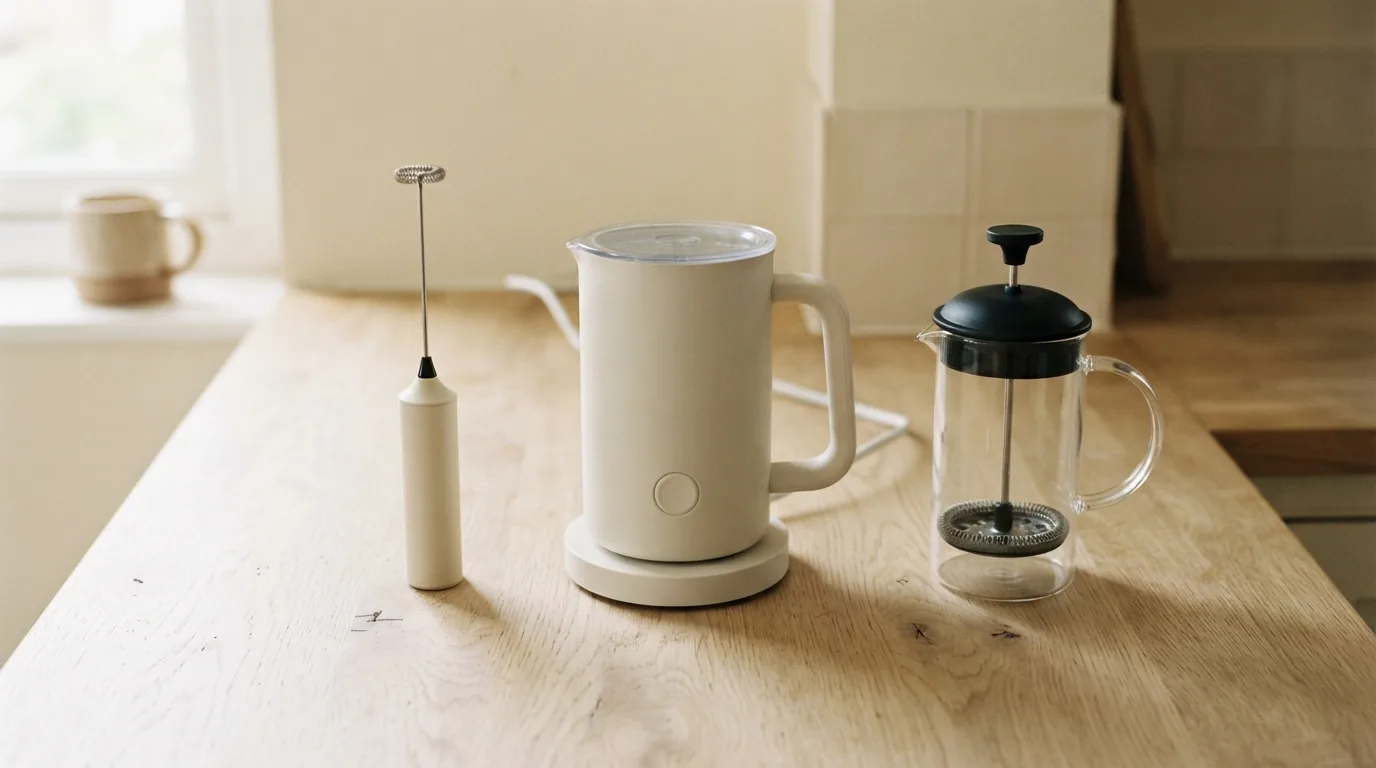
There are three kinds of milk frother, and they are not competing versions of the same thing — they solve different problems.
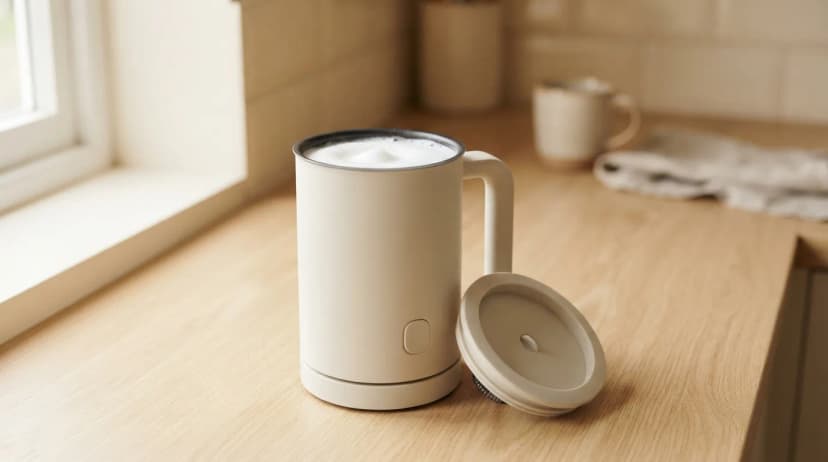
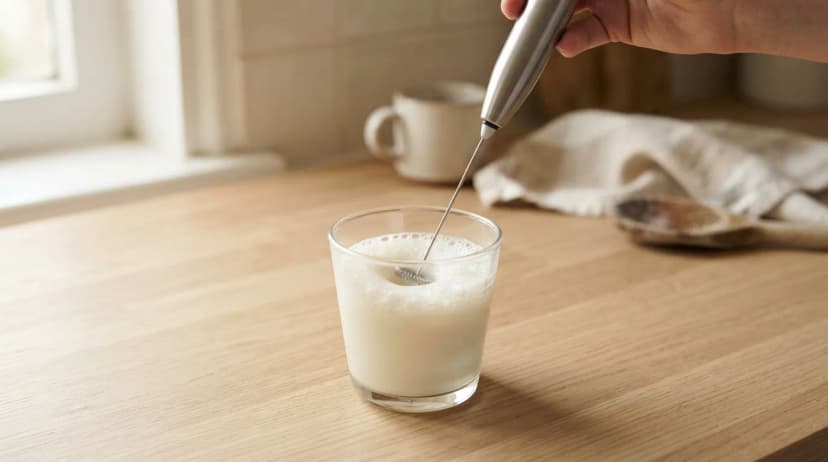
A handheld wand is a battery-powered whisk on a stick. It is the cheapest, the fastest for a single cup, and it does not heat anything: you warm the milk yourself first, or you make cold foam. An electric frother with a base heats and froths in one step, hands-off, and handles enough volume for two drinks back to back — at the cost of counter space and an outlet. A manual pump frother is a jug with a plunger and a mesh screen; no power, no batteries, no noise, and more parts to wash.
Pick by two questions: how many drinks are you making at once, and do you want the machine to handle the heat?
How Each One Actually Works
All three do the same physical job — force air into milk fast enough that its proteins trap the bubbles before they escape, as described in how to froth milk at home. The difference is what supplies the force.
Handheld wand. A small motor spins a coiled wire whisk at high speed. You control depth and duration, which is why the same wand can produce loose foam or microfoam depending on your technique. Nothing about the device manages temperature.
Electric with base. A jug sits on a powered base. A magnetic or shaft-driven whisk spins inside while a heating element warms the milk to a preset temperature, then the unit stops on its own. You are trading control for consistency: it will hit the same result every time, and you cannot easily push it past that result.
Manual pump. A plunger with a fine mesh screen, pushed by hand. Each stroke forces milk through the mesh, which both introduces air and breaks bubbles down. It is the same mechanism as frothing in a French press, in a vessel designed for it.
The Three Types, Compared
| Handheld wand | Electric with base | Manual pump | |
|---|---|---|---|
| Power | Batteries or USB | Mains outlet | None |
| Heats the milk | No | Yes | No |
| Time to foam | 30–60 sec | 1–2 min including heating | 30–45 sec of pumping |
| Hands-off | No | Yes | No |
| Suits two drinks at once | No | Yes | Sometimes, by capacity |
| Parts to wash | Whisk head only | Jug and whisk | Jug, plunger, mesh screen |
| Noise | Brief high whir | Loudest, runs longest | Silent |
| Counter footprint | Drawer | Permanent | Cupboard |
| Cold foam | Yes | Only if it has a cold setting | Yes |
What Does Not Differ
Foam quality is mostly not a function of which type you buy. Within any of these categories the mechanism is close to identical across price points, and the milk matters more than the machine — see best milk for frothing. A handheld wand and an electric frother, given the same milk at the same temperature, produce foam that is far more similar than their price difference suggests.
What money actually buys, in rough order: whether it heats, how much it holds, how well it is built, and how quietly it runs. Not better bubbles.
This matters because most "my frother doesn't work" problems are not equipment problems at all — they are milk temperature or protein problems, and they happen identically across all three types.
Which One Fits Which Kitchen
One drink a day, made fast, stored in a drawer: a handheld wand. It is the lowest-commitment option in every sense — price, space, and how much you lose if you decide frothing was a phase.
Two lattes every morning, or you would rather press a button: an electric frother with a base. The heating step is the real advantage; the hands-off part is what people actually keep using.
No outlet to spare, or you want it silent: a manual pump. Also the only one of the three that keeps working during a power cut, which is a smaller advantage than it sounds but a real one.
Occasional foam, a few times a month: none of them. A jar with a lid and thirty seconds of shaking is a complete answer to that use case, and the no-equipment methods cover it properly. Buying a frother you use twice a year is not a purchase this site is going to talk you into.
What to Look For Once You Have Picked a Type
- Capacity, in drinks rather than millilitres. A jug's stated volume is its maximum fill for heating; the frothing maximum is usually about a third of that, because foam needs room to expand.
- Whether the whisk head detaches. On handhelds and electrics alike, a fixed whisk means awkward cleaning around a motor housing you cannot submerge.
- Cold-foam setting, if iced drinks are the point. Some electric frothers only run their heating cycle, which is useless for cold foam.
- Batteries versus rechargeable, on a handheld. Rechargeable is one less thing to buy; replaceable batteries are one less thing to fail permanently.
Full detail on each of these, plus the specs that look important and are not: what to look for in a milk frother.