Direct Answer
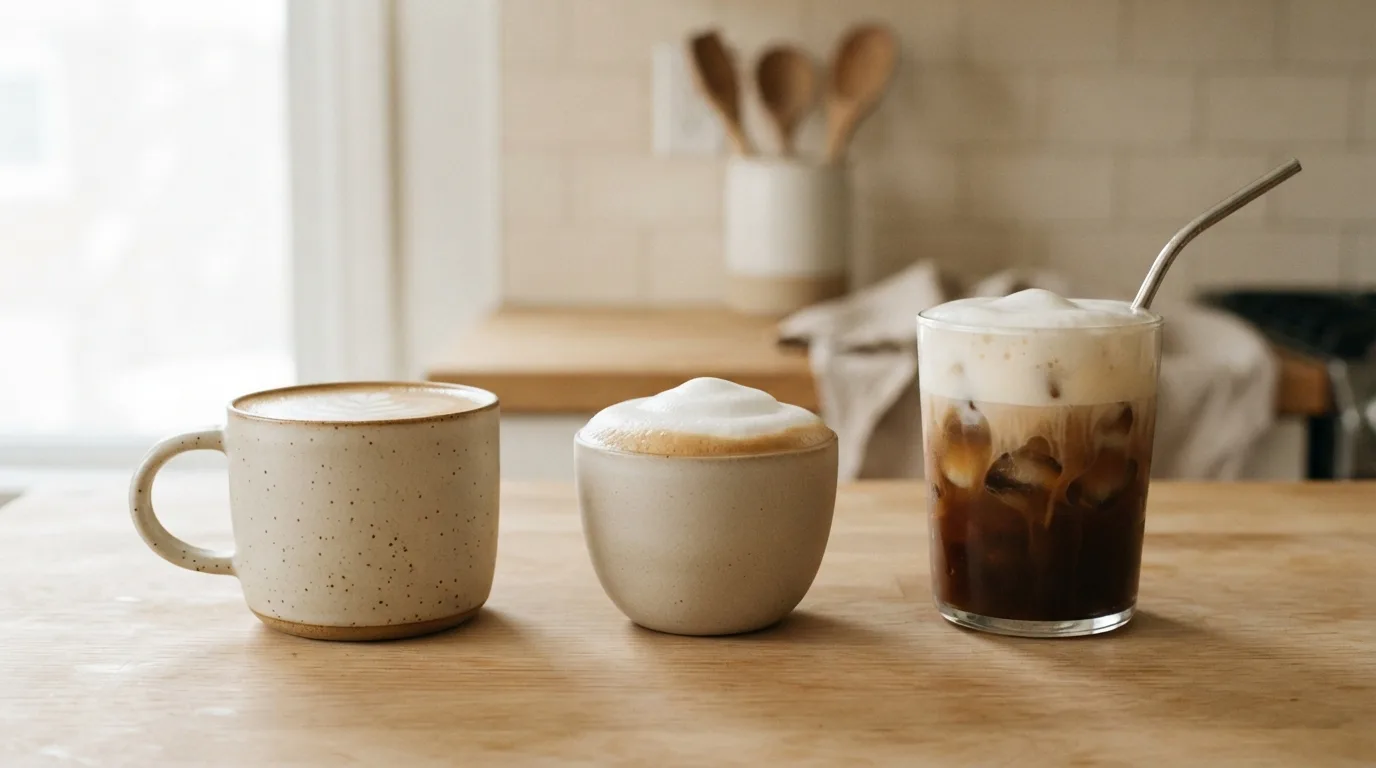
These three drinks want three different foam textures, and that — not a ranking of products — is what should decide the frother.
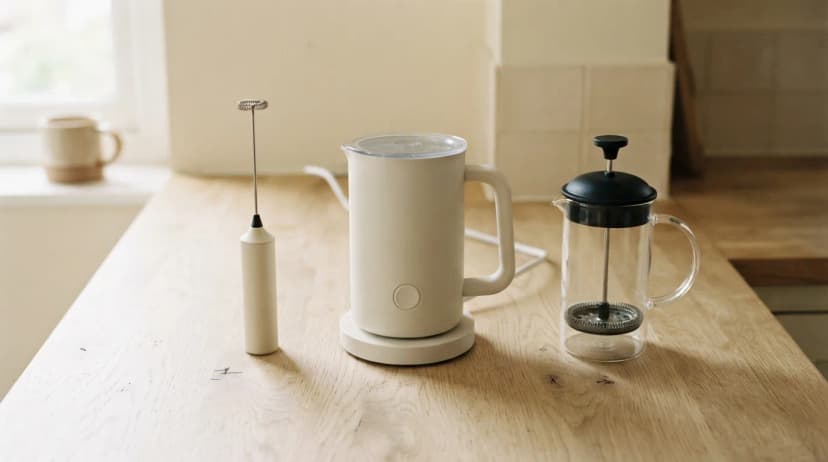
A latte wants dense, glossy, pourable microfoam, which favours a frother you can control by depth and timing: a handheld wand, or an electric with variable speed. A cappuccino wants stiffer, drier foam that sits on top rather than folding in, which almost any frother produces without effort. Cold foam needs a device that aerates without heating, which rules out any electric frother lacking an explicit cold mode.
Lattes: Control Matters More Than Power
A latte's foam has to pour. That means small bubbles and enough density to hold together as it leaves the jug — the stretch-then-texture sequence covered in how to get microfoam at home.
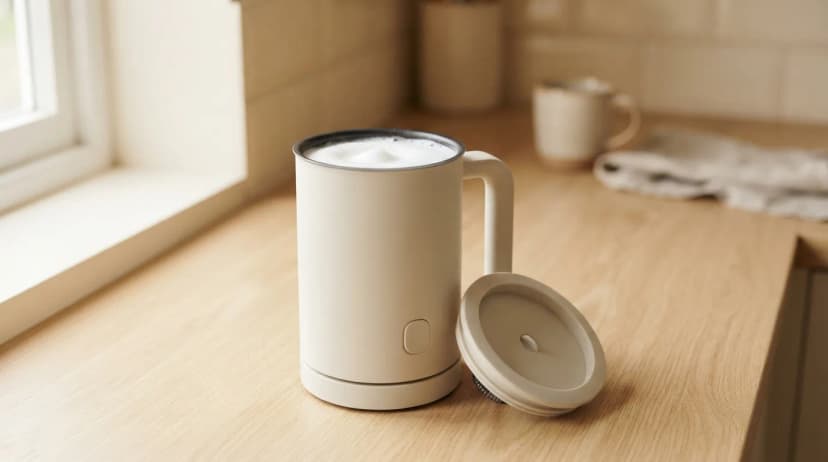
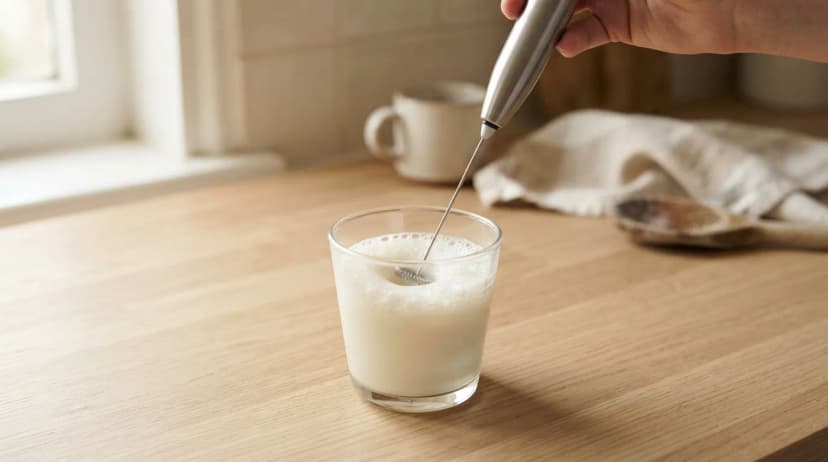
What that asks of the equipment is control over when air goes in and when it stops. A handheld wand gives you that directly: you decide the depth and the timing. An electric frother with variable speed gives you some of it. A fixed-program automatic gives you consistency at a texture you cannot adjust, which is fine if its preset happens to be what you want and frustrating if it is not.
Whole milk is the forgiving choice here while you learn the timing.
Cappuccinos: Almost Anything Works
Cappuccino foam is stiffer, drier, and deeper than latte foam — it sits on the drink rather than blending through it. Mechanically that means stretching longer (more air) and texturing less (leaving the bubbles larger).
This is the easiest of the three to hit, and it is the reason cappuccino-shaped foam is what most people get by default when they are aiming at a latte. Any of the three frother types produces it. If cappuccinos are what you drink, the frother decision is genuinely about capacity, cleaning, and whether you want it to heat — not about foam capability.
Skim milk holds this texture longest, at the cost of flavour. That trade-off is covered in best milk for frothing.
Cold Foam: The One Real Constraint
Cold foam is the only case in this article where a frother can flatly fail.
It is made from refrigerator-cold milk with no heating step at all, and it needs 20–30 seconds of aeration rather than 15 because cold milk resists taking on air. A handheld wand does this fine. A manual pump does this fine. An electric frother with no cold setting cannot do it at all — its program heats, and heating is exactly what cold foam must not do.
If iced drinks are why you are buying, this is the single spec to confirm before anything else. Full method in hot foam vs cold foam.
The Part That Is Not About the Frother
Across all three drinks, the milk does more work than the machine. Skim foams stiffest and holds longest; whole tastes richest and collapses sooner; barista oat is the closest non-dairy match; plain almond will not hold foam for any of these drinks regardless of what you froth it with.
A cheap wand with the right milk beats an expensive machine with the wrong one, every time. If a drink is not coming out right, start with the milk before concluding the equipment is the problem.
The Short Version
| Drink | Foam needed | What the frother must do |
|---|---|---|
| Latte | Dense, glossy, pourable | Let you control depth and timing |
| Cappuccino | Stiff, dry, deep | Nothing special |
| Cold foam | Light, cold, floating | Aerate without heating |
Beyond these three, milk frother recipes covers matcha, hot chocolate, and the rest. If you make all three, a handheld wand is the only single device that covers every case without a caveat — see handheld vs electric vs manual for the full trade-offs.