Direct Answer
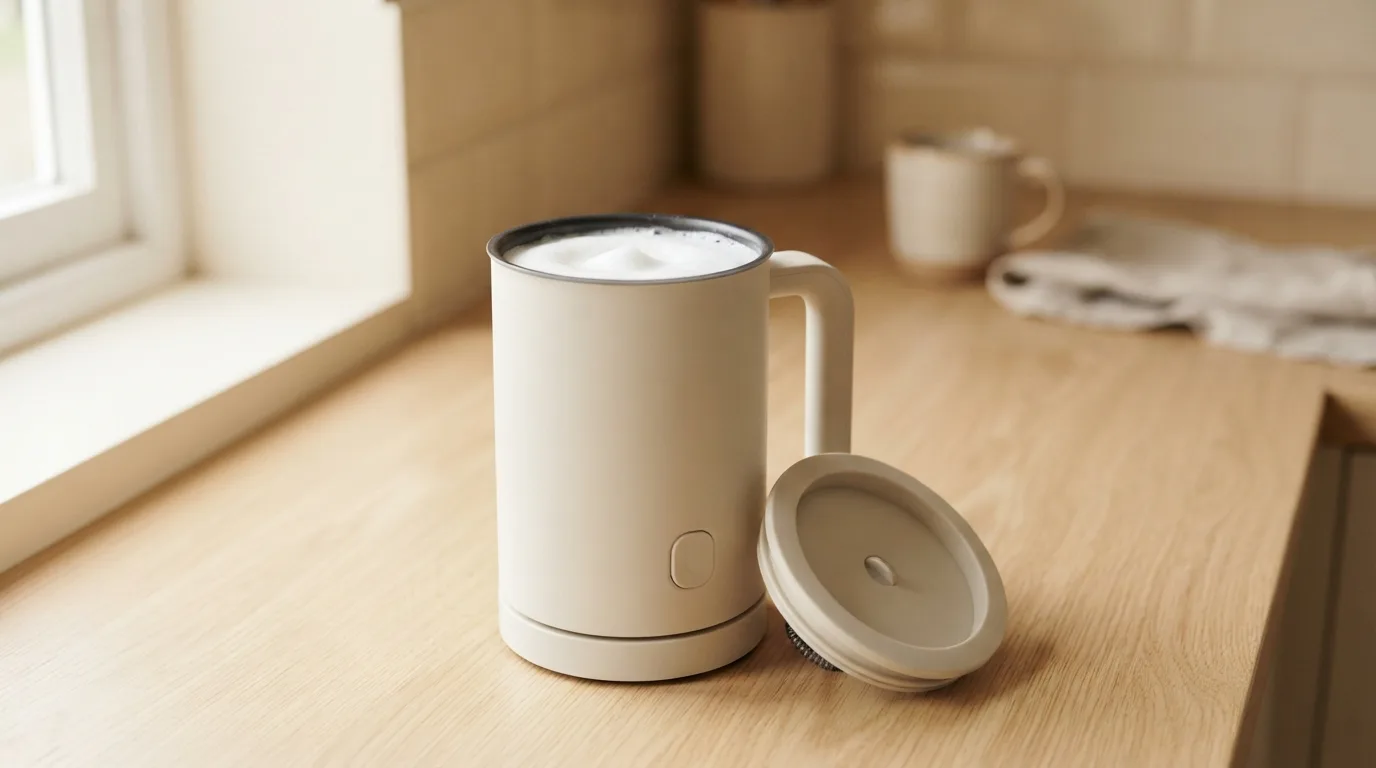
An electric milk frother is a jug that sits on a powered base. It heats the milk and spins a whisk at the same time, then shuts off on its own when it reaches a preset temperature. You pour milk in, press a button, and walk away.
That last part is the whole product. It is not that an electric frother makes better foam than a battery wand — given the same milk it mostly does not — it is that it removes the separate heating step and does not need you standing over it.
What It Does Differently
Two things, and only two.
It manages temperature for you. Milk foams best between roughly 130–160°F and starts breaking down above that, which is why overheated milk produces foam that collapses within a minute. An electric frother stops inside that window every time. Doing it yourself with a microwave and a bit of attention gets the same result; the machine just makes it unmissable.
It runs unattended. Thirty to ninety seconds of not holding anything. Trivial once, meaningful every morning.
Everything else — bubble size, foam density, how long the foam holds — comes down to the milk you used far more than the appliance.
The Settings That Matter
Most units in this category offer some combination of:
- Hot foam / latte — heats and aerates fully. The default.
- Warm milk, no foam — heats and stirs without pulling air in, for a flat white base or hot chocolate.
- Cold foam — aerates with the heating element off. Absent on a surprising number of models; if iced drinks are the reason you are buying, confirm it exists rather than assuming heat is optional. See hot foam vs cold foam.
A separate whisk attachment for foam versus stirring is common. It is a genuine functional difference, not a packaging trick — the stirring disc has no coil and deliberately introduces almost no air.
Where It Falls Down
Capacity is smaller than the jug looks. There are two fill lines and the frothing one is much lower, because foam needs room to expand upward. A jug that heats 500ml of milk may only froth about 150ml. Plan around the frothing line, not the jug size on the box.
It occupies counter space permanently. A handheld goes in a drawer. This does not, and an appliance that lives in a cupboard is an appliance you stop using.
It is the loudest of the three types and runs the longest, because the motor is working the whole time the milk is heating.
Cleaning is immediate or it is hard. Milk proteins bake onto a warm surface. The jug usually cannot go in the dishwasher, since it houses the whisk coupling and often the element. Rinse it while it is still warm and this is a five-second job; leave it and it is not.
When You Do Not Need One
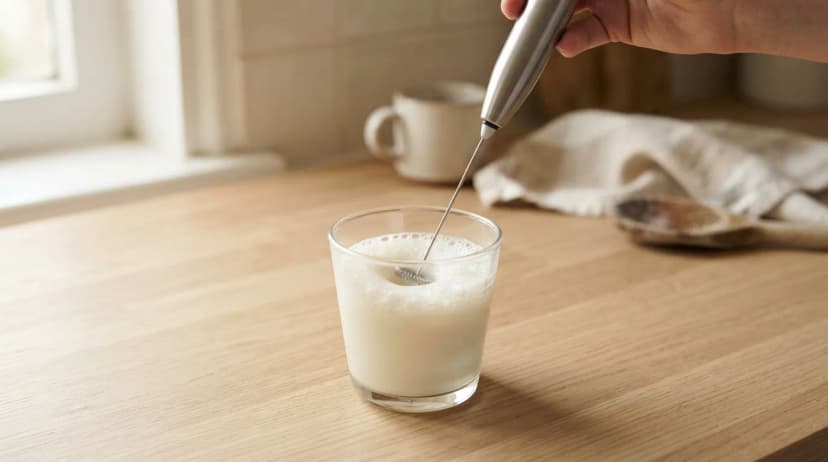
If you make one drink at a time and already own a microwave, a handheld wand plus twenty seconds of heating produces a comparable result for a fraction of the price and none of the counter space. The electric frother is buying you a step, not a better outcome.
If you froth milk a few times a month, a jar with a lid genuinely covers it. That is not a consolation prize — it is the same physics with your arm as the motor.
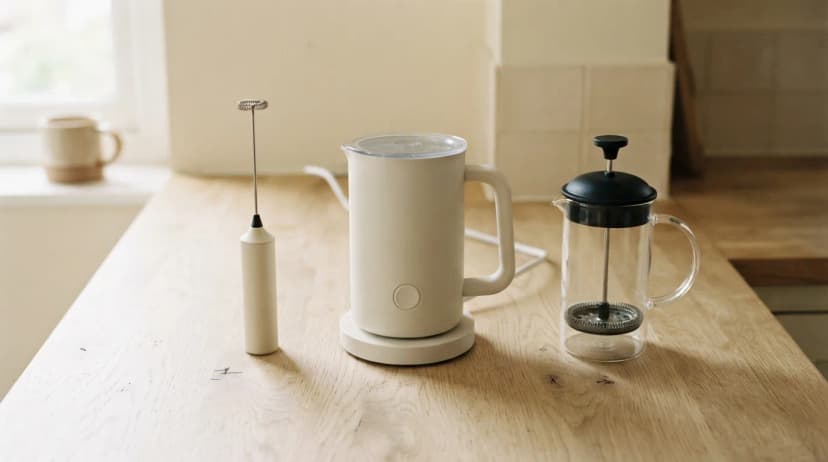
And if what you actually want is silence or no power draw, a manual pump frother does that and an electric one cannot. The full three-way comparison is in handheld vs electric vs manual.
Who It Suits
Someone making two milk drinks most mornings, who would rather press one button than manage a microwave and a wand, and who has an outlet and a spare corner of counter to give it. That is a real and common situation, and for that person this is the right category.
For anyone making one drink, occasionally, or in a kitchen with no spare surface, it is the wrong one — and the cheaper answer is not a compromise.