Direct Answer
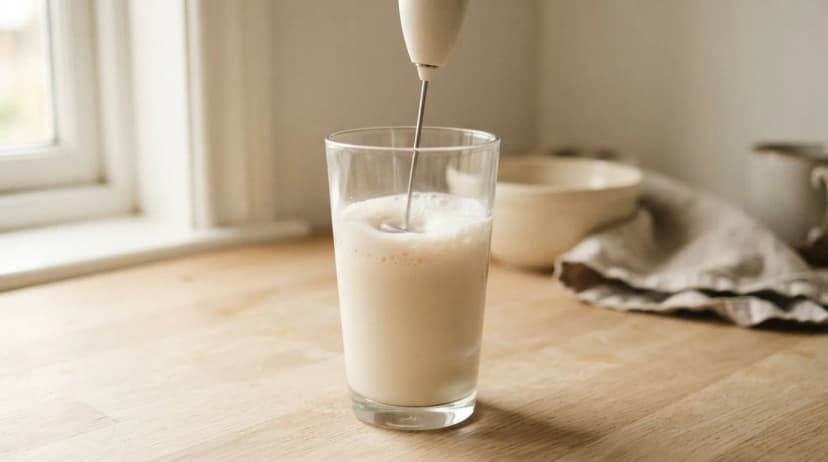
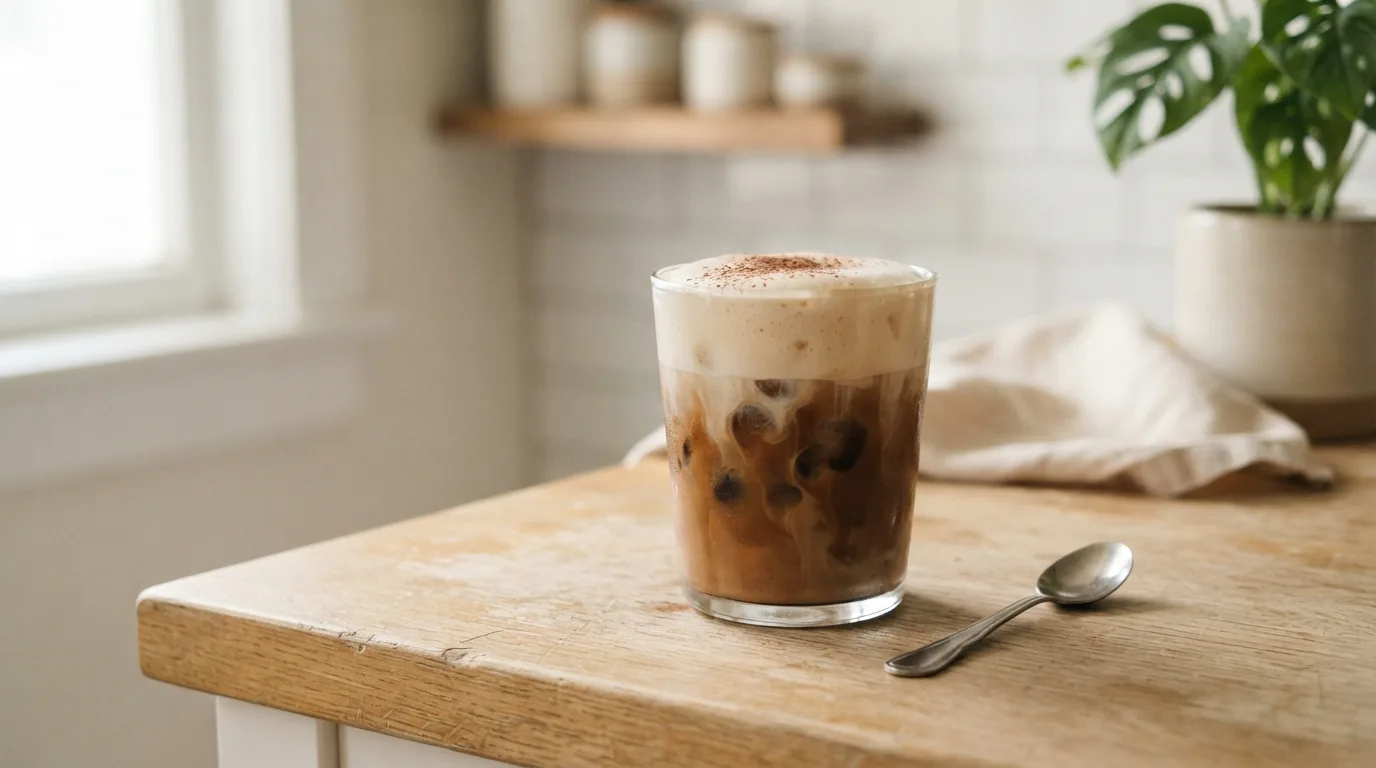
Cold foam is milk frothed straight from the fridge — no heating step at all — for 20–30 seconds, then spooned onto an iced drink so it floats on top instead of mixing through.
That is the whole base. Sweet cream, salted, and flavoured versions are the same thirty seconds with one thing added before you froth.
Why It Is Different From Hot Foam
Milk protein is less pliable cold, so it traps air into lighter, looser bubbles that sit on a liquid rather than integrating with it. That is the point: cold foam is meant to be a distinct layer you sip through, not a texture folded into the drink.
Two practical consequences. It needs longer frothing — 20–30 seconds against the 15 warm milk wants — because cold milk resists aerating. And it is less stable, lasting minutes rather than holding indefinitely, so it is made immediately before serving. The mechanism is covered in full in hot foam vs cold foam.
The Base
- Cold milk straight from the fridge, into a tall narrow cup, filled no more than a third.
- Any flavouring goes in now, before frothing — stirring syrup in afterwards flattens the foam you just made.
- Froth 20–30 seconds until it thickens to a pourable, slightly stiff texture.
- Spoon onto the drink rather than pouring.
Four Variations
Sweet cream cold foam. Two parts cold milk to one part heavy cream, plus a teaspoon of vanilla syrup. The cream makes it noticeably denser and it holds longer than plain milk foam — the fat that hurts cold foam volume helps its stability once it is there.
Salted cold foam. The base plus a pinch of fine salt and a teaspoon of sugar, frothed together. Salt suppresses bitterness, which is why it works over cold brew specifically rather than over a sweeter drink.
Vanilla or caramel. One to two teaspoons of syrup into the milk before frothing. Syrup adds sugar, and sugar weighs foam down — start at one teaspoon and expect a slightly looser result than the plain base.
Pumpkin or spiced. A teaspoon of purée or spice blend, frothed in. Particulates interfere with bubble structure more than dissolved sugar does, so this is the loosest of the four. Strain the purée if you want it to hold.
What to Put It On
Cold brew, iced lattes, iced matcha, iced chai. Anything served over ice where a distinct top layer is the point.
Not hot drinks. Cold foam on a latte melts into the milk within seconds — the foam has no structural advantage once it warms, and you have simply added cold milk. Hot drinks want hot foam, made hot.
Which Milk
Skim and low-fat make the best plain cold foam, because fat resists aerating more when cold than when warm. This inverts the usual advice: whole milk is the forgiving choice for hot drinks and the harder one here.
The exception is sweet cream cold foam, where the cream is doing something different — it is there for density and mouthfeel, not for volume.
Barista oat is the most reliable non-dairy option. Plain almond will not hold cold foam at all. Full comparison: best milk for frothing.
The One Equipment Constraint
This is the only drink on the site where a frother can outright fail. An electric model that only runs a heating program cannot make cold foam, and no technique gets around it. A handheld wand or a manual pump does it easily.
If iced drinks are why you are buying, confirm a cold setting exists by name — see what to look for in a milk frother and handheld vs electric vs manual.
More in the series: milk frother recipes.