Direct Answer
Four things change how a frother behaves in your kitchen: whether it heats the milk, how much it can actually froth, whether the whisk detaches for cleaning, and whether it can make cold foam.
Almost everything else printed on the box — wattage, the number of speed settings, claims about foam quality — either describes something that does not affect the foam or describes something every unit in the category does equally.
The Four That Matter
1. Does it heat?
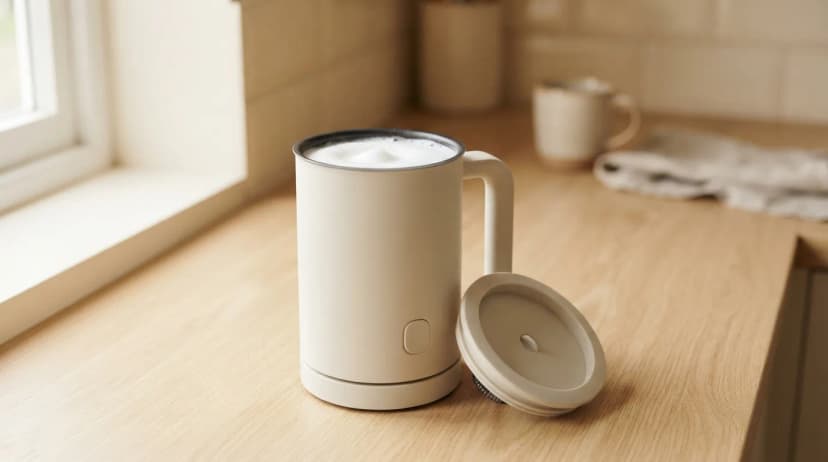
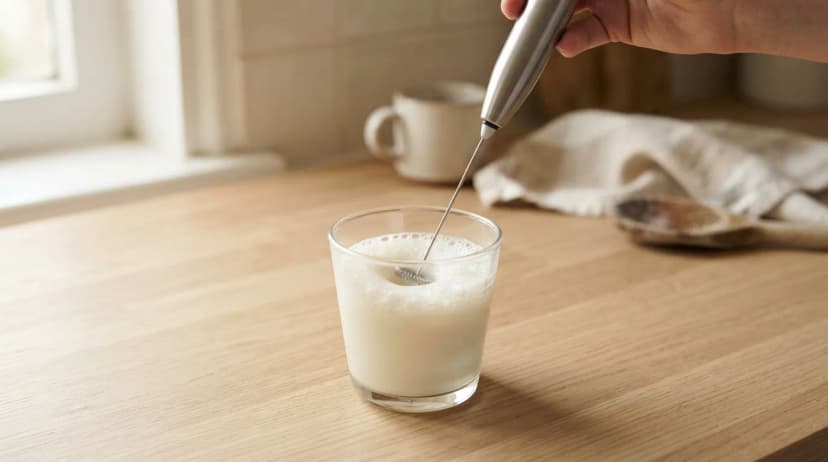
This is the real fork in the category, and it is covered in full in handheld vs electric vs manual. Heating is a convenience, not a quality feature: a microwave reaches the same temperature. Decide whether you want to hand off that step before comparing anything else, because it determines which type you are shopping in.
2. Frothing capacity, not jug capacity
The number on the box is usually the maximum heating volume. The frothing maximum is much lower — often around a third — because foam needs headroom to expand into. Most jugs have two fill lines for exactly this reason, and the lower one is the one that governs how many drinks you get.
Think in drinks, not millilitres. "Enough milk for two lattes" is the useful unit, and it is frequently not what the headline volume implies.
3. Does the whisk detach?
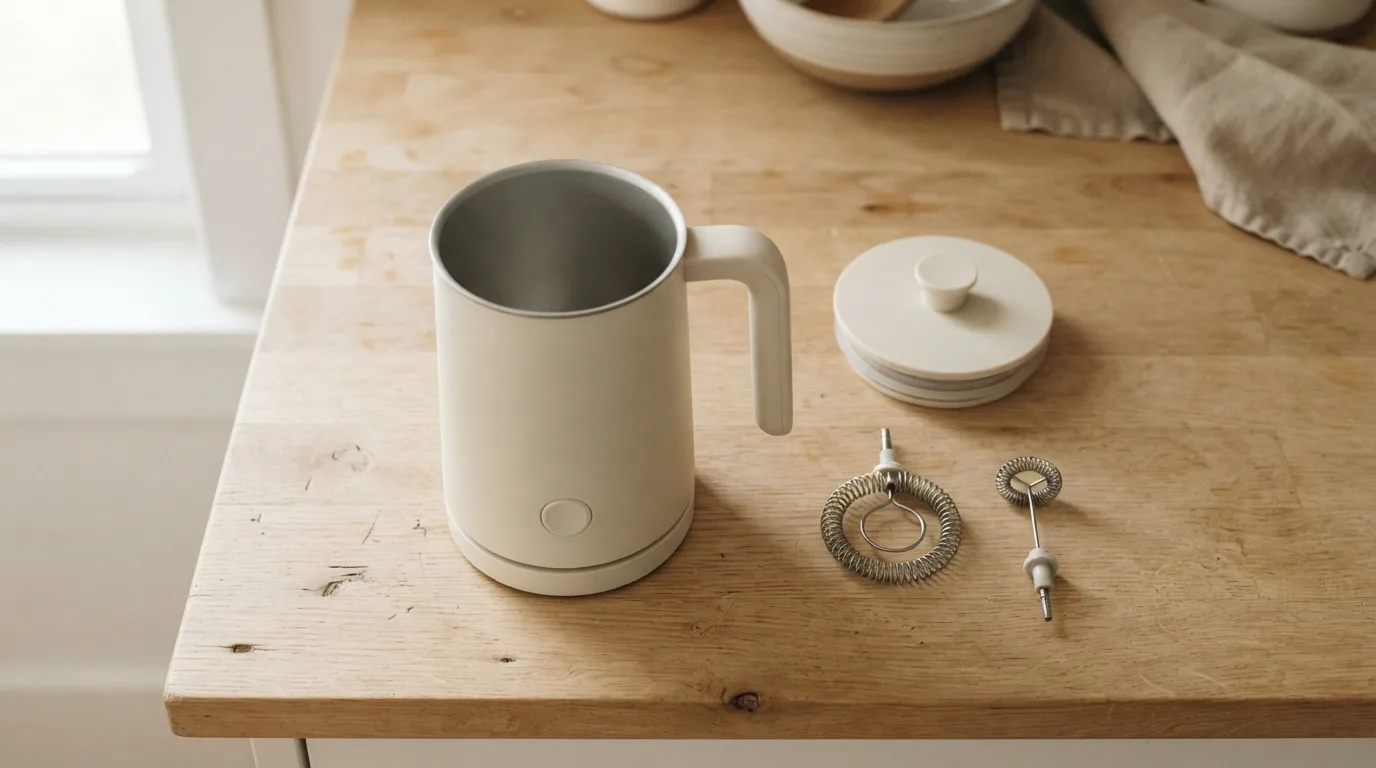
On every type. A whisk that comes off is rinsed in seconds; one that does not means cleaning a coil attached to a motor housing or a heating element you cannot submerge. Milk protein sets fast on a warm surface, so this is the difference between a five-second habit and a chore you start avoiding.
4. Cold foam, if you drink iced
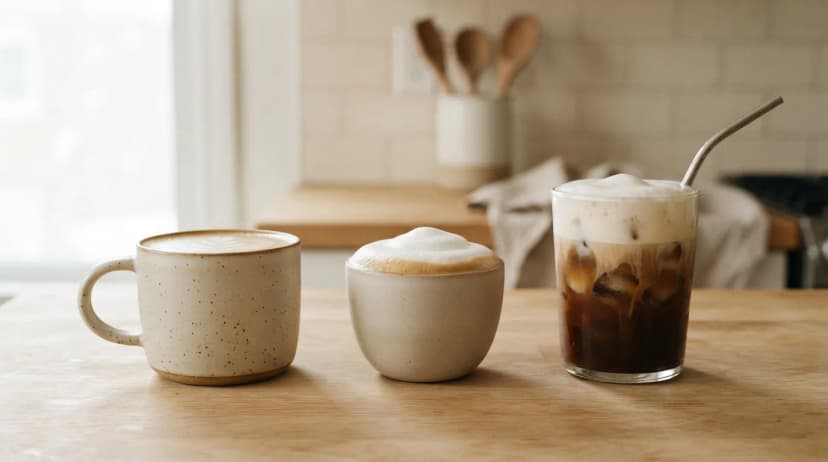
Not every electric frother can froth without heating. Some run a fixed heat-and-whisk program with no way to skip the element, which makes them useless for the iced drinks in hot foam vs cold foam. If cold foam is why you are buying, confirm the mode exists by name.
The Ones That Do Not Matter Much
Wattage. It describes the heating element, not the whisk. It tells you how fast the milk warms, and nothing about bubble size.
Speed settings. Genuinely useful on a handheld, where you control the process. Close to decorative on an automatic unit running a fixed program.
Jug material. Steel is more durable and holds fewer odours than plastic. Neither participates in foam formation. Steel also hides the fill lines, which is a small argument against it.
Foam quality claims. Every frother in every category is doing the same thing: forcing air into milk. Within a type, the mechanism barely varies. Any claim that one unit produces categorically better foam than another is describing the milk, not the machine — which milk you use has a far larger effect than which frother you buy.
The Question Behind the Question
A lot of frother shopping is really a frequency question in disguise.
Frothing milk most mornings justifies an appliance. Frothing it a few times a month does not, and a jar with a lid is a complete answer for that pattern rather than a stopgap. There is no mechanical reason to own dedicated equipment for occasional foam, and a frother that lives in a cupboard is one you have stopped using.
If you are not sure which side of that line you are on, the honest advice is to shake a jar for two weeks and find out. That costs nothing, and it tells you more than any spec sheet.