Direct Answer
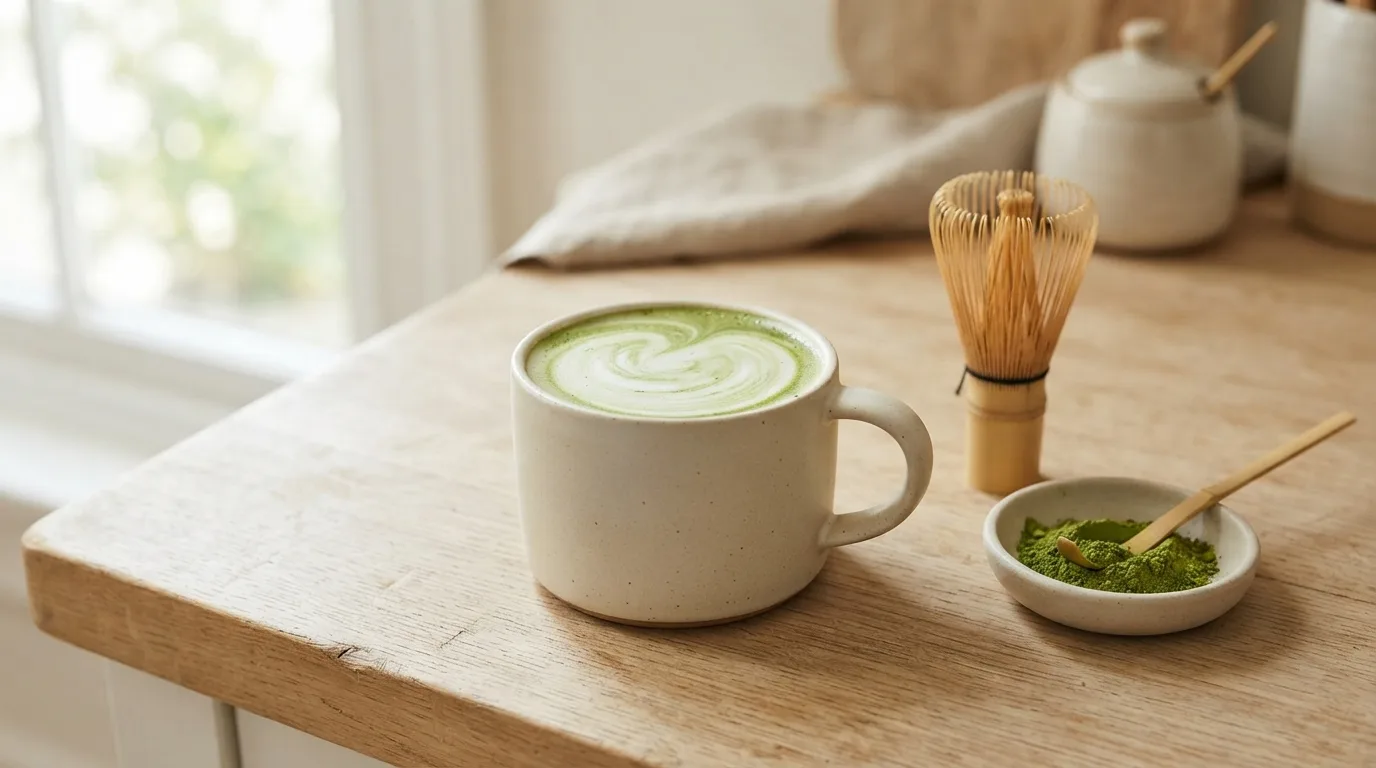
Do it in two stages: dissolve the matcha in a splash of hot water first, then froth the milk separately and pour it in.
A frother is very good at the dissolving part — about ten seconds, no sieve, no bamboo whisk. But it has to happen before the milk arrives. Matcha powder dropped into a full cup of milk clumps immediately, and those clumps survive almost any amount of subsequent frothing.
Why the Order Matters
Matcha is a fine powder that hydrates badly. Dropped into a large volume of liquid, the outside of each clump wets and forms a skin that keeps the inside dry — the same reason cocoa and protein powder behave the way they do.
A small amount of water changes the ratio: there is not enough liquid for clumps to hide in, and the frother's whisk reaches everything. Once the matcha is a smooth paste, adding milk cannot un-dissolve it.
The Method
- Spoon 1–2 teaspoons of matcha into a tall, narrow cup.
- Add about 2 tablespoons of hot water — around 175°F, not boiling. This is the step people skip and the one that decides whether the drink is bitter.
- Froth for 10–15 seconds until it is a smooth, slightly foamy paste with no lumps against the side of the cup.
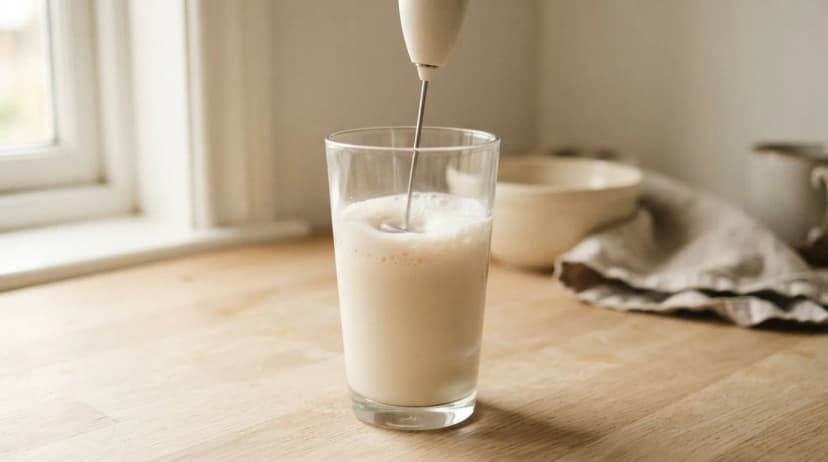
- Froth the milk separately — heated and frothed for a hot latte, or straight from the fridge for an iced one.
- Pour the milk in, holding the foam back with a spoon, then spoon the foam over the top.
Temperature Is the Whole Bitterness Question
Matcha is more sensitive to water temperature than coffee. Around 175°F is the working target; water straight off the boil is roughly 35 degrees above that and pulls out a harsh astringency that no amount of milk or sweetener hides.
If you have no thermometer: boil, then wait about two minutes, or add a splash of cold water to the boiled water before the matcha.
Grade matters too. Culinary-grade matcha is more astringent by design and is meant to be tasted through other ingredients. If a latte tastes harsh at the right temperature, the powder is doing that, not your technique.
Iced Matcha
Same two stages, one change: dissolve the matcha in hot water as above — cold water will not dissolve it properly, and this is the one place the hot step is non-negotiable — then let it cool briefly, pour over ice, and top with cold foam frothed straight from the fridge.
An electric frother that only runs a heating cycle cannot make that topping. See what to look for in a milk frother.
Which Milk
Whole milk is the usual choice because matcha is grassy and the fat rounds it off. Barista oat is the most common non-dairy pairing and works well, with a sweetness that suits matcha better than it suits coffee. Skim makes a stiffer foam but leaves the drink thin against matcha's flavour.
Almond milk is the difficult one here — it barely foams, and its own flavour competes with the matcha rather than carrying it. Full comparison: best milk for frothing.
If the Foam Will Not Hold
That is a milk problem rather than a matcha problem, and the five usual causes are in why is my milk not frothing. More drinks in the same series: milk frother recipes.